
Navigating the complexities of social interaction can be challenging for some children, especially those with developmental differences. In Campbelltown, finding effective and tailored social skills support is crucial for fostering confidence and positive relationships. This article explores how professional Behaviour Support, delivered by experienced practitioners at Brilliant Life Services, can help children develop essential social competencies, addressing everything from peer interaction to conversation skills and play. We’ll delve into the strategies used and how these programs are accessed through NDIS funding.
Key Takeaways
- Social skills support addresses areas like peer interaction, turn-taking, conversation, and play.
- Brilliant Life Services in Campbelltown offers evidence-based strategies, including social stories and natural environment teaching.
- Behaviour Support Practitioners deliver tailored programs to build essential social competencies.
- NDIS funding can cover social skills support through your behaviour support budget.
- Families play a vital role in reinforcing learned social skills at home and in the community.
What Social Skills Support Involves
Social skills support is a specialised approach designed to help children develop the abilities needed for successful interaction with others. It’s about more than just being polite; it encompasses a wide range of behaviours and understandings that facilitate meaningful connections. For children in Campbelltown, this support can be a game-changer for their development and participation in daily life.
At Brilliant Life Services, social skills support specifically addresses areas such as: peer interaction, including initiating and maintaining friendships; turn-taking in games and conversations; understanding and responding to social cues; developing appropriate conversation skills; and engaging in cooperative play. These programs are delivered by skilled behaviour support practitioners, who understand the unique needs of each child.
Signs Your Child May Benefit from Social Skills Support
Recognising when your child might need professional social skills support is the first step towards helping them thrive. Many children experience occasional social awkwardness, but persistent challenges can indicate a need for targeted intervention. In Campbelltown, Brilliant Life Services is here to help families identify these signs.
Look out for these indicators:
- Difficulty initiating or maintaining conversations: Your child might struggle to start talking to others or keep a conversation going.
- Challenges with turn-taking: This can manifest in games, group activities, or even simple dialogue.
- Limited peer interaction: They may prefer to play alone or have trouble joining in group activities with other children.
- Misinterpreting social cues: Difficulty understanding facial expressions, body language, or tone of voice.
- Struggles with cooperative play: Finding it hard to share, negotiate, or work together with others during play.
- Frequent social misunderstandings or conflicts: Repeatedly encountering friction with peers due to social interactions.
Early intervention is key. If you notice these signs, seeking professional guidance can provide your child with the tools they need to navigate social situations more effectively. Brilliant Life Services offers Early Childhood Intervention for younger children, ensuring support begins when it’s most impactful.
Evidence-Based Strategies for Building Social Skills
Effective social skills programs are built on evidence-based strategies that have been shown to help children learn and apply new skills. At Brilliant Life Services in Campbelltown, our practitioners utilise a range of techniques tailored to each child’s individual needs and learning style.
Some of the key strategies include:
- Social Stories: These are short, descriptive stories that explain social situations and appropriate responses in a clear, concise manner. Social stories help children understand social cues, expectations, and the perspectives of others, making complex interactions more predictable. They tend to work particularly well for children who need help understanding the “why” behind social rules — for instance, a child who struggles to grasp why they should wait their turn or why another child might feel upset.
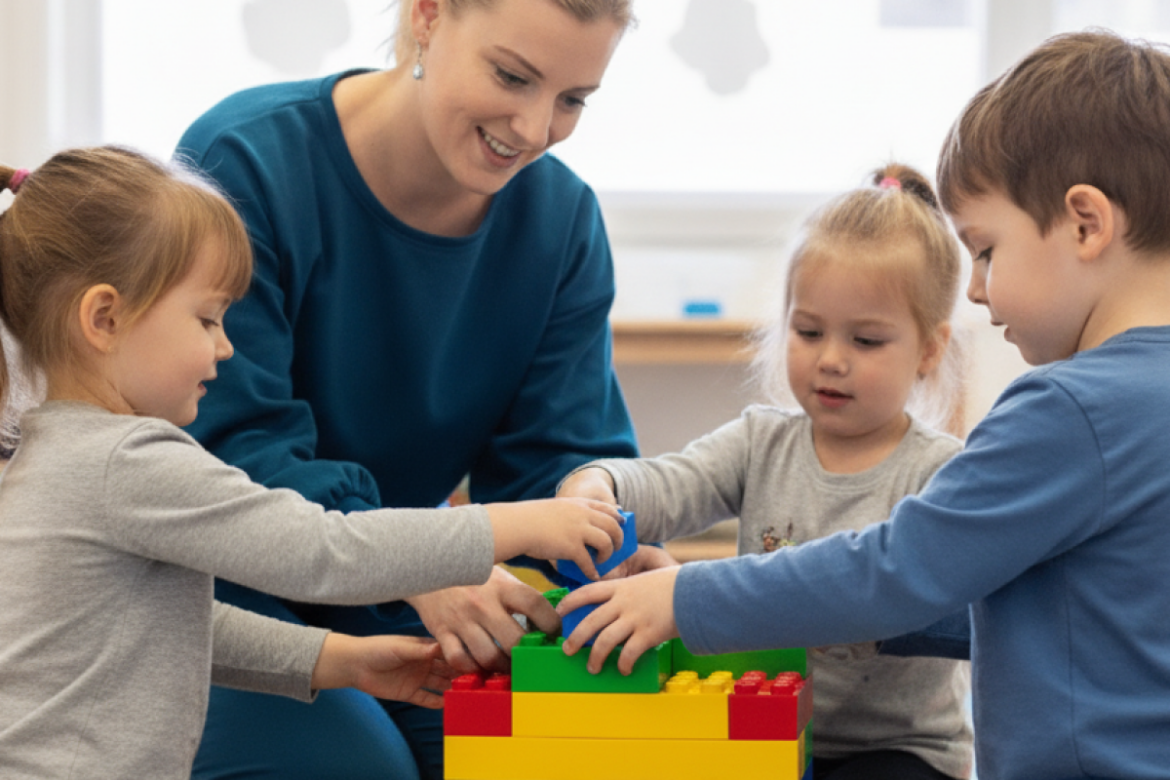
- Structured Play Groups: Facilitated play groups can provide a safe and controlled environment for children to practise social skills with peers. Practitioners can guide interactions, offer prompts for turn-taking and sharing, and provide immediate feedback. These activities to encourage social interaction are invaluable for real-world application. Structured play is often the best fit for children who have limited peer experience or who find unstructured group settings overwhelming — the facilitator’s presence reduces unpredictability while still giving children genuine practice with other kids.
- Natural Environment Teaching (NET): This strategy involves teaching social skills within the child’s everyday routines and environments, such as during playtime at home or at a local park in Campbelltown. NET capitalises on natural opportunities for learning, making the skills more generalisable and functional. Where social stories and structured play build understanding in controlled settings, NET bridges the gap to real life — it is especially effective for children who can demonstrate skills in a therapy room but struggle to use them spontaneously at school or in the community.
- Role-Playing: Practising social scenarios through role-playing allows children to rehearse responses and experiment with different social behaviours in a low-pressure setting. This builds confidence and prepares them for actual interactions.
- Visual Supports: Visual schedules, cue cards, and social scripts can help children understand and remember social rules and sequences, particularly for those who benefit from visual learning.
Practitioners often combine several of these strategies within a single program. The blend depends on the child’s age, learning style, and specific social challenges — your practitioner will explain which combination suits your child during the assessment.
Collaboration with other therapeutic services, such as Speech Therapy, is also crucial. Communication skills are intrinsically linked to social interaction, and addressing both areas simultaneously can lead to more comprehensive and lasting improvements. Understanding how social interaction helps children learn underpins all our therapeutic approaches.
Get personalised guidance on how our behaviour support team in Campbelltown can help your child build confidence and positive peer interactions through evidence-based programs.
How Behaviour Support Practitioners Deliver Social Skills Programs
Behaviour Support Practitioners at Brilliant Life Services in Campbelltown are specially trained to assess, develop, and implement individualised social skills programs. Their approach is rooted in the key principles of positive behaviour support, focusing on proactive strategies and skill development.
The process typically involves:
- Comprehensive Assessment: A thorough evaluation of the child’s current social skills, strengths, and areas needing support. This includes observing interactions in various settings and gathering input from parents, teachers, and other caregivers.
- Individualised Goal Setting: Based on the assessment, specific, measurable, achievable, relevant, and time-bound (SMART) goals are established. These goals are tailored to the child’s unique developmental stage and social challenges.
- Program Development: Practitioners design a customised program incorporating a blend of evidence-based strategies mentioned earlier, such as social stories, role-playing, and natural environment teaching.
- Direct Intervention: Sessions are conducted one-on-one, providing direct teaching, modelling, and opportunities for practice. These can take place in our Campbelltown office, in the child’s home, or within community settings.
- Parent and Carer Training: A crucial component involves coaching parents and carers on how to reinforce social skills at home and in the community, ensuring consistency and generalisation of learned behaviours.
- Ongoing Monitoring and Review: Progress is regularly monitored, and the program is adjusted as needed to ensure the child continues to make meaningful gains.
Effective social skills support is highly individualised, focusing on a child’s unique needs and building on their strengths to foster meaningful connections.
Accessing NDIS-Funded Social Skills Support
For many families in Campbelltown, the National Disability Insurance Scheme (NDIS) provides the funding pathway for social skills support. Brilliant Life Services is a registered NDIS provider, making it easier for participants to access our services.
Social skills support is typically funded through the Capacity Building – Improved Relationships or Capacity Building – Improved Daily Living categories of an NDIS plan, under the umbrella of Positive Behaviour Support. NDIS funding eligibility for behaviour support is dependent on individual plans and goals. The National Disability Insurance Scheme (NDIS) sets out the types of supports that can be funded in more detail.
- NDIS Plan Review: If you believe your child would benefit from social skills support, discuss this need during your NDIS plan review. Clearly articulate how these services will help your child achieve their NDIS goals related to social participation and independence.
- Behaviour Support Plan: A Behaviour Support Practitioner will conduct an assessment to identify specific social skill deficits and develop a comprehensive behaviour support plan. This plan outlines the strategies, goals, and expected outcomes, which can then be submitted for NDIS funding.
- Provider Selection: Once funding is approved, you can engage Brilliant Life Services in Campbelltown. Our team will work with you to understand your child’s NDIS plan and ensure services align with their goals.
- Plan Management: Whether your plan is self-managed, plan-managed, or agency-managed, Brilliant Life Services can work with your preferred method to streamline the billing and administrative process. We are compliant with the NDIS Quality and Safeguards Commission, ensuring high standards of service delivery.
Supporting Social Skills at Home
Professional social skills support is most effective when reinforced in the home environment. Parents and carers in Campbelltown play a vital role in generalising the skills learned in therapy to everyday life.
Here are some practical ways to support your child’s social skill development at home:
- Model Positive Social Behaviour: Children learn by observing. Demonstrate good listening skills, empathy, turn-taking, and respectful communication in your own interactions.
- Create Opportunities for Social Interaction: Arrange playdates with peers, join local community groups, or participate in family activities that encourage social engagement.
- Practise Role-Playing: Rehearse upcoming social situations, like a birthday party or a school presentation, to help your child feel more prepared and confident.
- Use Social Stories and Visuals: Continue to use social stories or visual cues at home to explain social expectations and guide appropriate responses.
- Provide Specific Praise and Encouragement: Acknowledge and praise your child when they demonstrate new social skills, highlighting what they did well.
- Facilitate Problem-Solving: When social challenges arise, guide your child through problem-solving steps rather than solving it for them. Ask questions like, “What happened?” “How did that make you feel?” and “What could you try next time?”
Taking the Next Step in Campbelltown
If you’ve recognised some of the signs above in your child, here’s how to move from concern to action with Brilliant Life Services in Campbelltown.
- Get a referral (or self-refer): You can ask your child’s paediatrician, GP, or school support team for a referral to a behaviour support practitioner. If your child already has an NDIS plan with Capacity Building funding, you can also contact Brilliant Life Services directly — no separate referral is needed.
- Book an initial assessment: Call 1800 127 455 or use the online contact form to arrange a social skills assessment. During this first session, a practitioner will observe your child, talk with you about their strengths and challenges across different settings (home, school, community), and review any existing reports or diagnoses.
- Receive your child’s individualised plan: After the assessment, your practitioner will outline specific goals, recommend which evidence-based strategies suit your child, and explain how sessions will be structured — including whether they’ll take place at the Campbelltown office, at home, at school, or a combination.
- Begin the program: New participants can usually start within the same week, often with immediate capacity. Your practitioner will also schedule regular check-ins with you so you can see how your child is progressing and adjust the approach as needed.
If you’re unsure whether your child’s challenges warrant professional support, that’s completely normal — an initial conversation with the team costs nothing and carries no obligation. Brilliant Life Services can help you work out whether a full assessment is the right next step.
Frequently Asked Questions
What age range does Brilliant Life Services support for social skills in Campbelltown?
Brilliant Life Services supports children of all ages, from early childhood through to adolescence, with tailored social skills programs. Our practitioners assess each child’s developmental stage to create an age-appropriate and effective intervention plan.
How long does a typical social skills program last?
The duration of a social skills program varies depending on the child’s individual needs and goals. Some children may benefit from short-term, intensive support, while others may require ongoing, long-term intervention. This will be discussed and outlined in their individualised behaviour support plan.
Can social skills support be delivered via telehealth?
Yes, Brilliant Life Services offers telehealth options for social skills support, particularly for components like parent coaching, social stories, and some individualised sessions. This provides flexibility and accessibility for families across NSW, including Campbelltown and surrounding areas.
Do you offer group social skills programs in Campbelltown?
Brilliant Life Services offers individualised social skills support in Campbelltown. Group programs may be available depending on current demand and practitioner capacity; please enquire with our team for the latest information on group offerings.
What qualifications do your behaviour support practitioners hold?
Our Behaviour Support Practitioners are highly qualified professionals with backgrounds in psychology, social work, or related fields. They are trained in Positive Behaviour Support and registered with relevant professional bodies, ensuring they meet the stringent requirements of the NDIS Quality and Safeguards Commission.
Conclusion
Developing strong social skills is fundamental for a child’s overall well-being, academic success, and future relationships. In Campbelltown, Brilliant Life Services is dedicated to providing comprehensive and evidence-based social skills support through expert behaviour support.
By understanding what social skills support involves, recognising the signs your child may benefit, and exploring NDIS funding options, you can take proactive steps to empower your child. Our team is committed to delivering personalised programs that foster confidence, enhance peer interaction, and promote meaningful social participation for every child we support.
Gain confidence in navigating NDIS funding for your child’s social development. Our Campbelltown team offers expert guidance and can discuss a tailored assessment for your child’s needs.
Related services
- Behaviour Support Campbelltown
- Behaviour Support Campbelltown | NDIS & Positive Strategies